
It seems there have been a lot of posts on social media recently about whether masseter Botox makes jowls worse – and honestly, it’s a question I’ve been asked at least three times in clinic this week alone. So it felt like time to properly explain what is going on.
What is masseter Botox?
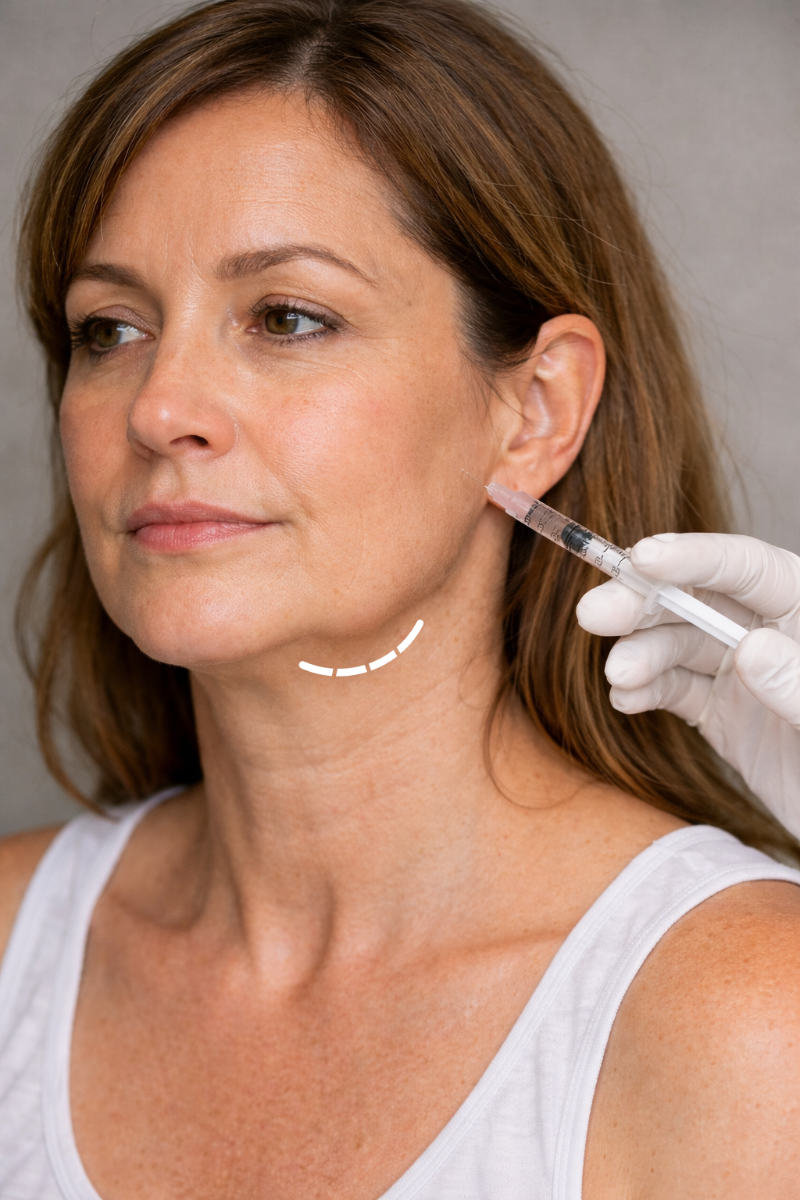
Masseter Botox involves placing small, precise injections of botulinum toxin into the masseter muscles – the large, chunky muscles that sit over the angle of the jaw and do much of the work when we chew. We use it in three main situations:
- Bruxism (teeth grinding and clenching) – to relieve symptoms and protect the teeth
- Facial slimming – to reduce the size of the masseter muscles and reshape the lower face
- Jaw tension and headaches – to ease the muscular tightness that can cause persistent discomfort
In all cases, Botox works by relaxing the muscle. Over time, a relaxed muscle that isn’t being worked as hard will gradually shrink – and that’s where the slimming effect comes from.
So why do people worry about jowls?
Jowls are caused by a combination of age-related changes in the face: loss of skin firmness, changes to the underlying bone, muscle, fat and ligaments, and the gradual downward drift of soft tissue over time. The result is an older, heavier-looking lower face and a less defined jawline.
Can masseter Botox cause jowls?
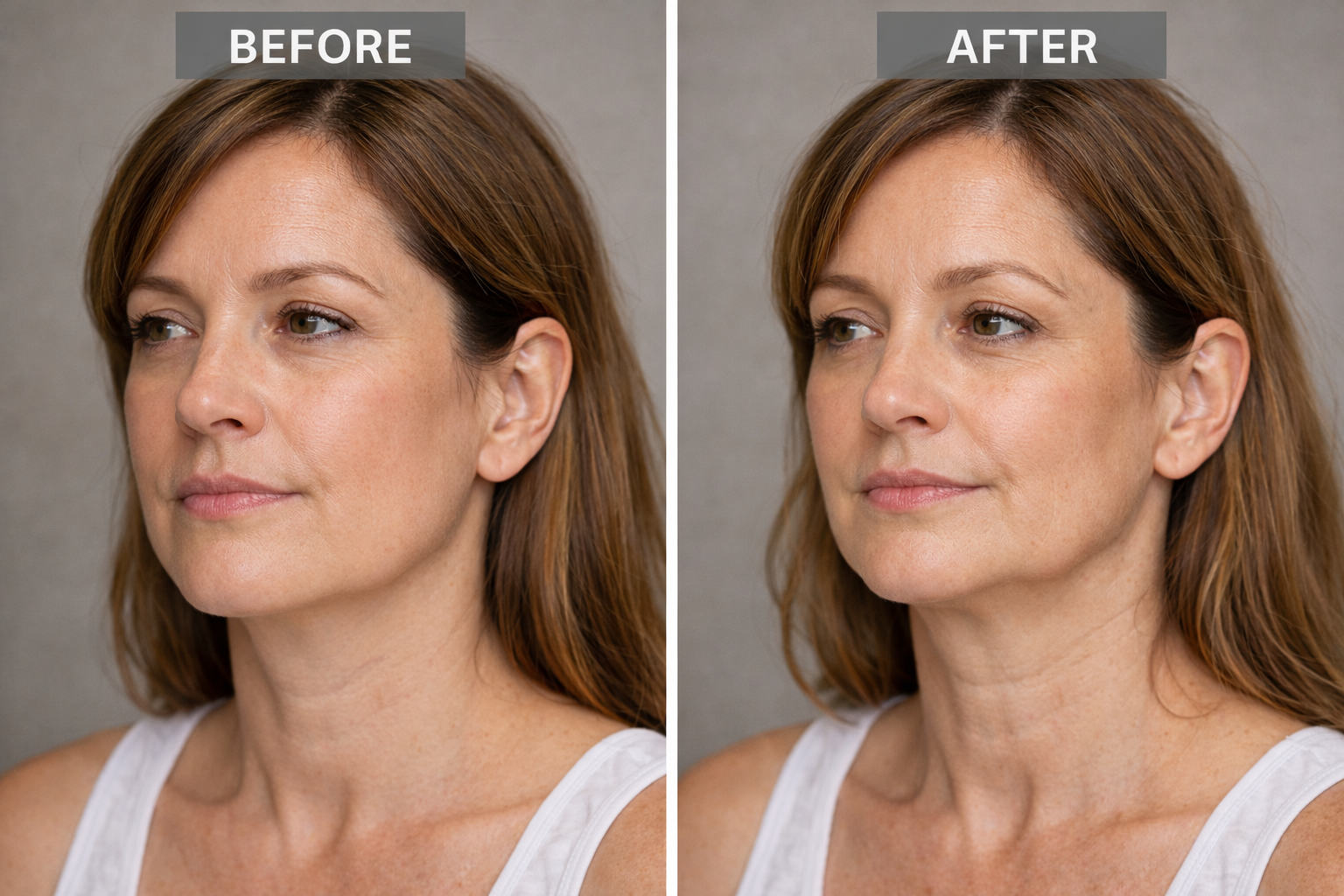
The short answer is yes – but it’s a little more nuanced than that. Masseter Botox doesn’t actually create a jowl from nothing. What it can do is make a small existing jowl appear more pronounced, or create the illusion of one where there wasn’t one before.
Here’s what’s happening.
Loss of structural support
Think of the masseter muscle as a tent pole sitting at the back of the jaw, supporting and pinning back the skin and soft tissue above it. When we shrink the masseter with Botox, we’re effectively reducing the height of that tent pole. The “tent” on top – the skin and fat – sags forward slightly, creating the appearance of jowling.
Volume reduction along the jawline
In some patients, a slimmer jaw improves definition beautifully. In others – particularly those with a smaller underlying bony structure or pre-existing heaviness in the soft tissues – the reduction in muscle bulk can have the opposite effect, leaving the jawline looking less supported, blending into the neck, rather than more refined.
Who is most at risk of jowling after masseter Botox?
We warn all patients about this risk, but certain groups are more susceptible:
- Patients over 35 who already have some age-related changes – reduced skin firmness, volume loss in the cheeks, or early jowling already present
- Patients with significant masseter hypertrophy (very large masseter muscles), as they tend to experience more dramatic size reduction with treatment
- Patients with pre-existing soft tissue heaviness or a smaller underlying bony jaw structure
Those least likely to experience this are generally younger patients (under 35) with firm, well-supported skin, treated conservatively with a carefully judged dose.
How can we prevent jowling from masseter Botox?
Careful patient selection
Not everyone is a great candidate for masseter Botox, and part of our job is being honest about that. At Fitzrovia Clinic, we have over 26 years of combined aesthetic experience, which means we’re well placed to assess each patient individually and give genuinely tailored advice before any treatment takes place.
Conservative dosing
In patients who are at higher risk, or those who are particularly anxious about this side effect, we start with a lower dose and allow muscle shrinkage to happen gradually. This gives the overlying skin time to adapt and remodel – a bit like the difference between losing weight very quickly versus more slowly. The slower the change, the better the skin adjusts.
Treating the face as a whole
Rather than focusing on the masseters in isolation, we look at the full picture. Depending on the patient, this might include:
- Cheek support — patients lacking structural support in the mid-face may benefit from treatment here to provide better scaffolding for the soft tissues from above
- Lower face and neck depressors — treating the muscles that actively pull down on the jowl and jawline with Botox, allowing the lifting muscles of the cheek to work more effectively
- Skin tightening — for patients with skin laxity, radiofrequency microneedling or laser treatments can make a meaningful difference to firmness and tone
What can be done if jowls develop after masseter Botox?
The good news is that this is manageable, and in many cases entirely reversible. Options include:
- Not retreating the masseters – as Botox wears off over three to six months, the muscle gradually begins to work again and rebuilds towards its original size, restoring structural support and reducing the jowling that developed
- Skin tightening treatments – radiofrequency microneedling is our go-to, delivering heat energy deep into the skin to stimulate collagen and improve firmness; collagen-stimulating injectables such as Sculptra or hyperdilute Radiesse can also help. Essentially we are aiming to tighten the skin over the smaller muscle
- Dermal fillers – in patients who need to continue Botox for bruxism or jaw tension for symptomatic relief, fillers can restore some of the structure that treatment has reduced, helping to support the overlying tissue
- Adjusting future treatments – reducing the masseter dose, extending the interval between sessions, and considering the temporalis muscle as an alternative target for patients with grinding or jaw tension, which can maintain symptomatic relief while reducing masseter dependence.
In summary
Masseter Botox can produce genuinely brilliant results, especially for patients who are in pain or at risk of damaging their teeth, but it’s a treatment where patient selection, thorough assessment, and clinical experience really matter.
It’s also worth knowing that Botox treatment to the masseter muscles – even when the purpose is purely aesthetic – is regulated by the Care Quality Commission (CQC) in England and should only be carried out in a CQC-registered premises like Fitzrovia Clinic.