
One of the most common things I hear from patients at Fitzrovia Clinic is “I have pigmentation, can you just laser it off?”
And the honest answer is always the same.
Maybe. But first we need to work out exactly what kind of pigmentation it is.
Pigmentation is a broad term that covers several different skin conditions, and each behaves in its own way. Some types clear very easily. Others need a gentler, more medical approach. And some will darken or spread if the wrong treatment is used.
This is why correct diagnosis always comes first before we choose lasers or skincare.
Why Pigmentation Needs Careful Assessment
Pigment forms when the skin produces too much melanin but the reason this happens and how deep the pigment sits can vary hugely.
For some people it is related to sun exposure and the pigment sits quite superficially. For others it develops after inflammation such as acne or eczema. And for many women it is hormonally driven melasma.
Because the causes are different, one standard treatment approach simply does not work for everyone and can sometimes cause flare ups rather than improvement.
At Fitzrovia Clinic our pigment assessments always include:
- Medical skin consultation
- Accurate pigment diagnosis
- Skin typing for laser safety
- Clinical photography for objective tracking
- A personalised treatment plan
This careful approach is particularly important for patients with darker skin tones where the right laser choice is essential to avoid post treatment pigmentation.
The Most Common Types of Pigmentation We See
Melasma
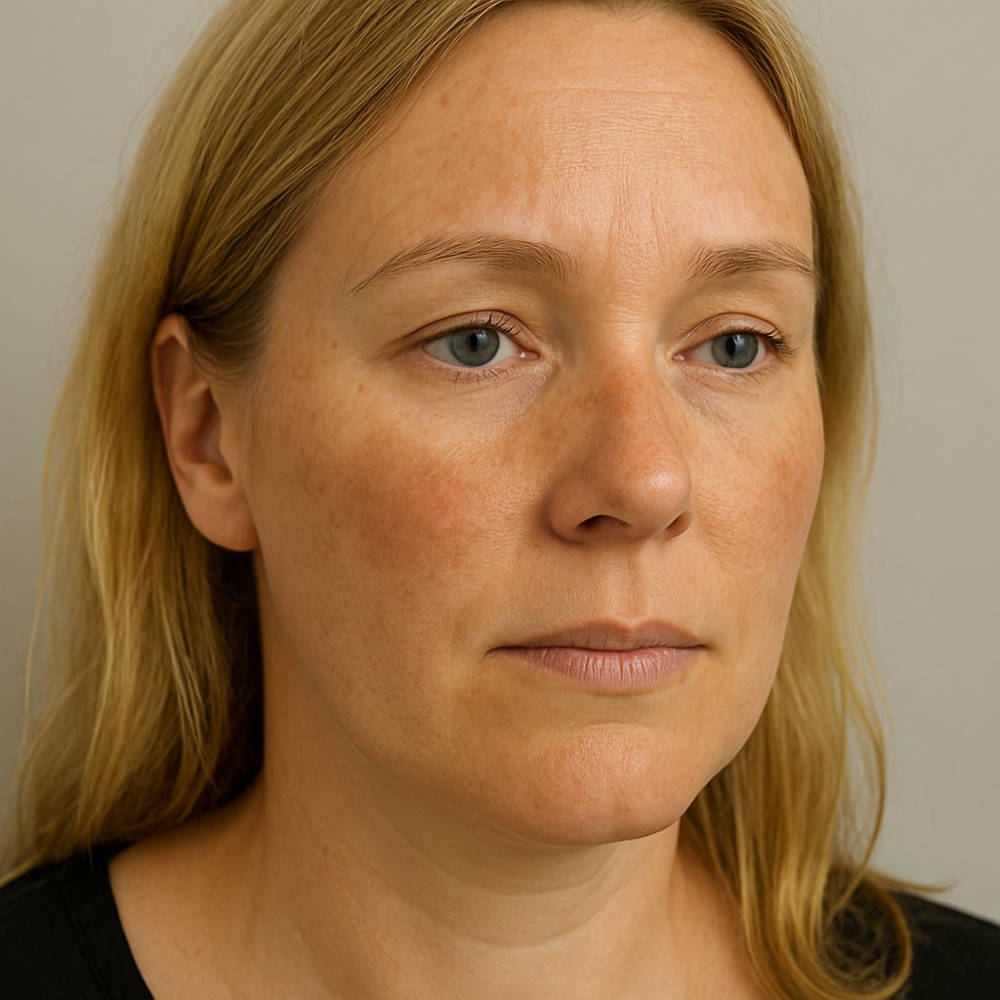
Melasma is one of the most common pigment conditions we treat and also one of the most misunderstood.
It usually presents as:
- Brown or grey-brown patches across the cheeks, forehead, nose, upper lip and jawline
- A symmetrical distribution
- Flat smooth skin rather than raised pigment
- Often sparing the eyelids and under eye area
Melasma is driven largely by hormones including pregnancy, contraception, IVF, HRT and the menopausal transition. Sun exposure is also key to the worsening and reoccurrence of melasma, and genetics also contribute.
In melasma the pigment-producing cells are extremely sensitive to both heat and inflammation. This means that treatments commonly used for other pigment types such as IPL or aggressive lasers can worsen melasma.
This is why we developed our dedicated pathway.
The Fitzrovia Melasma Programme™
Melasma does not respond to quick fixes. It needs a steady controlled medical approach.
Our programme is a structured three-month treatment pathway combining:
- Bespoke prescription compounded skincare
- Three carefully chosen laser treatments performed monthly
- Clinical photography tracking
- Long term stabilisation and maintenance planning
The goal is not just to lighten pigment temporarily but to suppress pigment activity calm the melanocytes and maximise long term remission.
Solar Lentigines (Sun Spots)
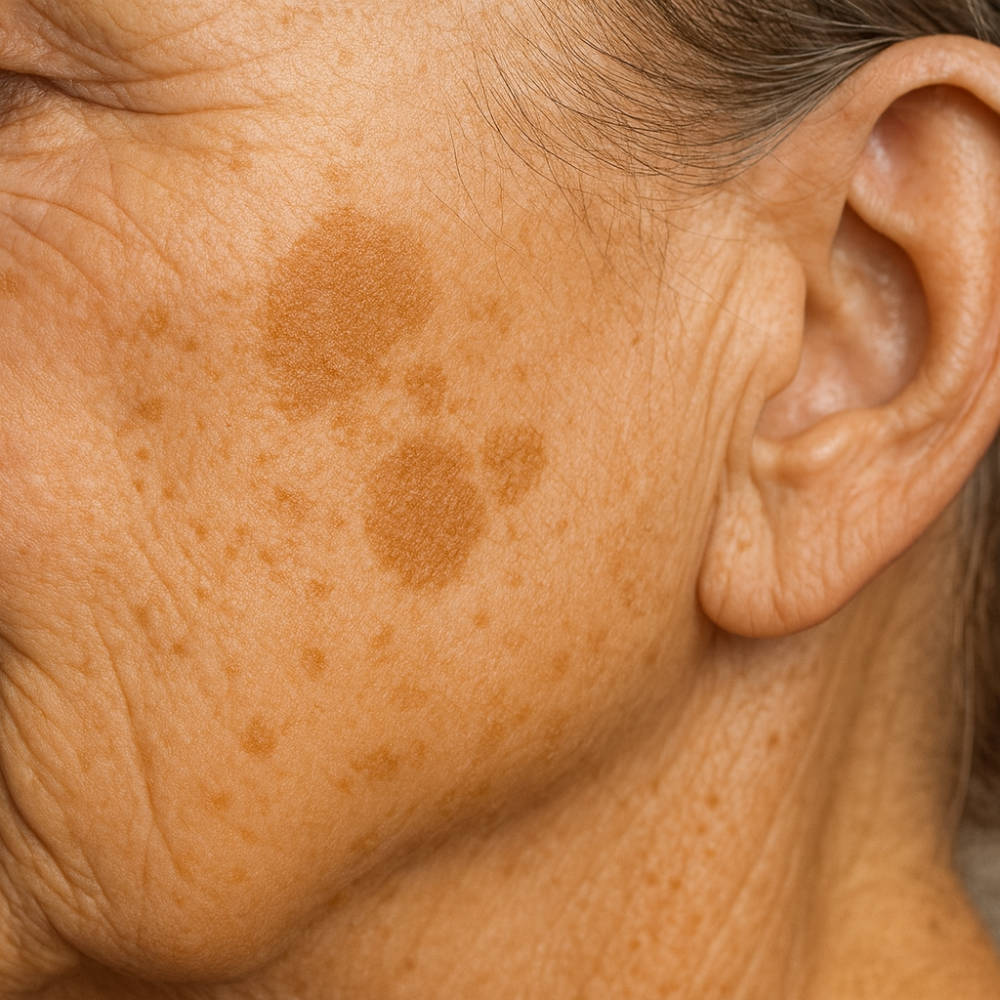
Sun spots also known medically as solar lentigines are extremely common and are the most straightforward pigment problem to treat.
They develop from cumulative ultraviolet exposure over time and usually appear as:
- Clearly defined brown or tan spots
- Irregular in size but sharply edged
- Random in placement rather than symmetrical
They tend to appear on sun-exposed areas including the cheeks, temples, forehead, hands, chest and shoulders. They often become more noticeable with age.
Treatment options
Solar lentigines respond extremely well to:
- Targeted medical pigment lasers which selectively remove the pigment
- Carefully chosen light-based treatments depending on skin tone
- Cryotherapy using CryoPen
- Prescription brightening skincare and retinoids to improve background tone
In most patients these marks clear very effectively and usually do not recur if sun protection is maintained.
This is one of the most satisfying pigment treatments both for patients and clinicians because results can be dramatic and confidence restoring.
Post Inflammatory Hyperpigmentation (PIH)
PIH is one of the most distressing pigment conditions for patients. It develops after the skin has healed from inflammation or injury. We commonly see it after:
- Acne breakouts
- Eczema or skin reactions
- Aggressive osmetic procedures
- Unsuitable laser or IPL treatments
- Scratching or picking the skin
- Burns from cooking, hair tongs or straighteners
- Surgery or other skin injury
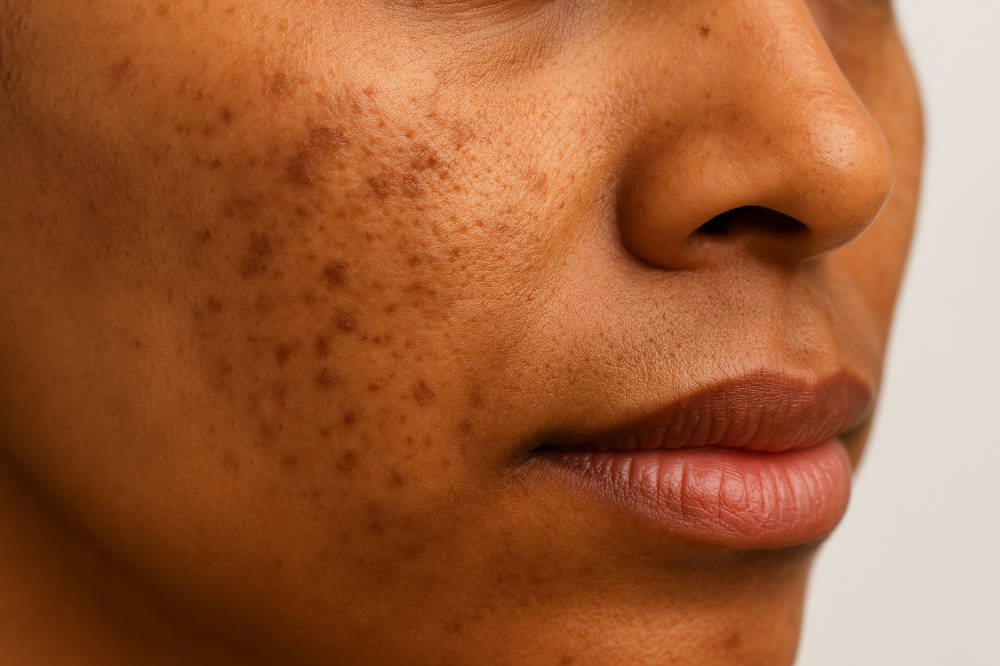
It appears as:
- Brown or grey marks left behind long after the original acne or injury has healed
- Irregular shapes rather than formal patches
- Areas that seem to darken with irritation, sun exposure or heat
PIH can be extremely frustrating because patients feel that their “problem skin” never truly gets better even when the original condition or injury resolves.
Treatment options
Managing PIH requires patience and a gentle approach
Treatment typically includes:
- Gentle specialised laser protocols selected to minimise inflammation and heat
- Prescription skincare including retinoids, pigment suppressors and brightening agents
- Barrier repair products to prevent further skin irritation
- Rigorous sun protection
The key is reducing inflammation first (if on-going) and pigment second.
Treated correctly PIH improves steadily but pushing the skin too hard, too early is one of the main causes of delayed recovery.
Freckles
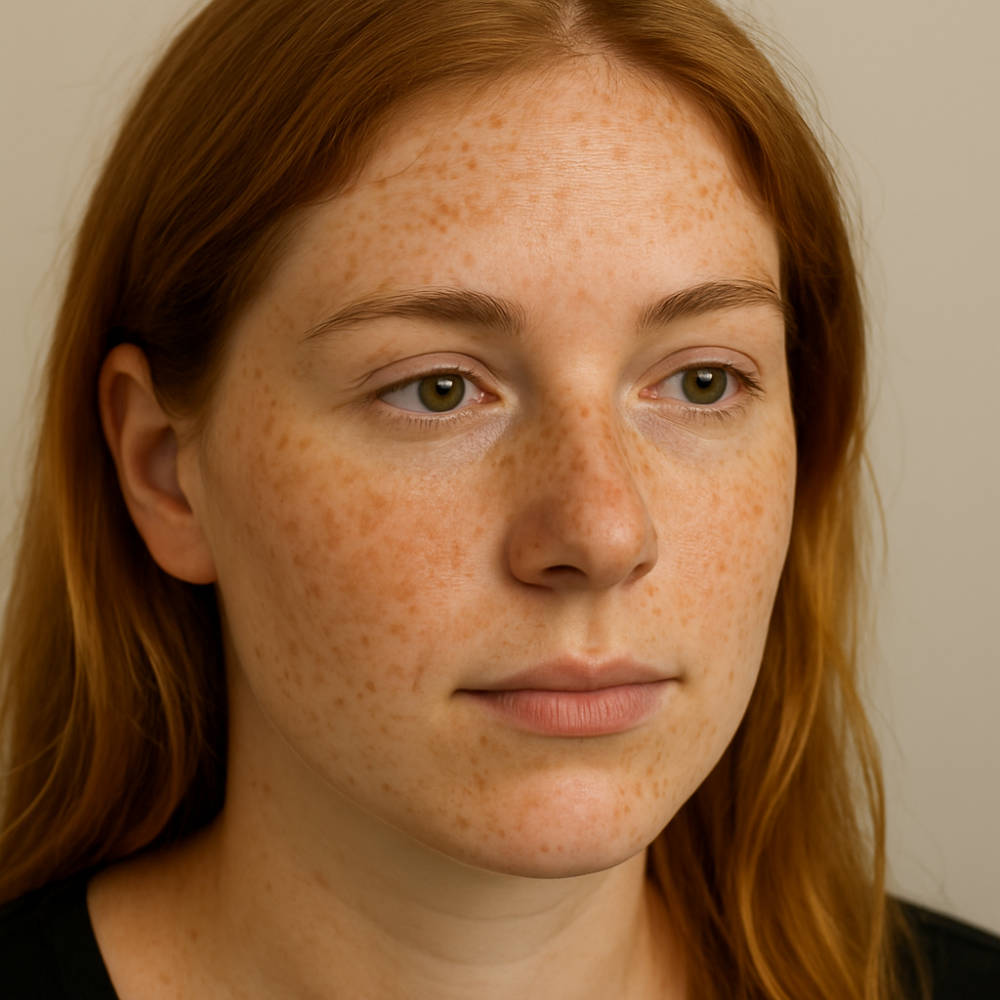
Freckles are genetic and usually develop in childhood.
They:
- Darken with sun exposure
- Fade in winter months
- Usually respond well to laser treatment and brightening skincare if patients wish to treat them
Ongoing sun protection is essential for long term control.
Why Diagnosis Is Everything
I spend a lot of time with patients explaining the importance of diagnosis. Treating pigment without diagnosing it correctly is one of the most common reasons treatments fail and can even make the pigmentation worse.
Melasma treated like sun damage often flares.
PIH treated too aggressively can darken.
Darker skin tones treated without an appropriate laser choice risks rebound pigmentation.
This is why a medical assessment matters.
How We Treat Pigmentation at Fitzrovia Clinic
Every patient receives a tailored plan combining the appropriate laser technology with carefully prescribed skincare.
This includes selection of the laser or energy-based devices suitable for the individual patient, and personalised skincare products.
Medical laser selection
Lasers and devices are chosen individually based on pigment type, skin tone, sensitivity and relapse risk rather than using a single device for everyone.
This allows us to treat pigmentation safely across all Fitzpatrick skin types year-round.
Bespoke compounded skincare
Many patients will have tried over the counter skincare such as vitamin C serums to improve their pigmentation. Unfortunately, these aren’t always effective and may even irritate sensitive skin. Instead, we use bespoke compounded prescription skincare, made individually for you. This gives us flexibility to include more effective ingredients, at the right concentration, and in a single product. Avoiding expensive multistep routines and wastage.
Prescription skincare is essential for pigment control and may include:
- Hydroquinone for short, carefully supervised suppression of pigment production
- Tranexamic acid to calm hormonally driven pigment signalling or in patients with particularly sensitive or compromised skin
- Vitamin C arbutin or kojic acid to support brightening
- Prescription retinoids to normalise pigment turnover and improve texture
- Barrier repair anti-inflammatory agents to calm sensitive skin
Skincare is reviewed and adjusted as treatment progresses.
Can Pigmentation Be Cured?
Solar lentigines and most PIH can often be cleared completely.
Melasma is chronic but very manageable.
The aim is not a once only fix but long-term stability and control. When treated properly most patients see significant improvement that can be maintained with ongoing care and excellent sun protection.
Why Patients Choose Fitzrovia Clinic
Patients choose us because they want careful, clinically proven medical treatment, without wasting money and time on cosmetic treatments with limited benefit.
We provide:
- Doctor led assessments
- Specialist melasma treatment pathways
- Fully bespoke prescription skincare
- Laser selection tailored to skin tone and pigment type
- Safe treatment year-round for all skin types
Ready to Start?
If you have pigmentation and are unsure which type you have or if past treatments have not worked the most effective next step is an expert assessment.
Book your pigmentation consultation at Fitzrovia Clinic and let us build a personalised plan for your skin.